
Best Ethereum staking protocols turn your idle assets into an automated money-making machine. Compare the most secure and profitable options in the market now.
- Tracking Big Money: A Guide to Using Whale Wallet Tracker Alerts Effectively
- Real World Asset Tokens Analysis: 3 Hidden Gems Outperforming Large-Caps
- Decoding Market Trends with a Crypto Chart Patterns Sheet: 4 Expert Tips
- 14 Best Passive Income Crypto Nodes for Generating $500 a Month Automatically
- 5 Experts Discuss the Latest Bitcoin Price Prediction Bull Trends
The transition of the decentralized economy into a highly scalable, yield-bearing environment has fundamentally changed how digital asset wealth is created. By utilizing the best ethereum staking protocols, long-term holders can successfully shift their strategy from simple price speculation to systematic dividend generation.
Related: Best Ethereum Staking Protocols: 14 Elite Services to Maximize Your Monthly Crypto Salaries
These sophisticated cryptographic platforms convert standard web3 holdings into foundational infrastructure collateral, validating transactions while paying a continuous stream of execution rewards. Setting a strict financial goal to construct a reliable, hands-free crypto salary requires a comprehensive exploration of the premier staking architectures available.
[Raw ETH Deposited] —> [Staking Protocol Smart Contracts] —> [Liquid Wrapper Issued + Daily APY Salaries]
Choosing where to deposit your capital is the single most vital operational decision you will make this year. To build a highly resilient capital engine, you must analyze platforms based on security audits, decentralization parameters, and liquidity profiles. This deep dive systematically reviews the fourteen most profitable digital asset frameworks designed to maximize your automated financial yield.
The ultimate index of the 14 best ethereum staking protocols
Read More : 7 Best Layer 2 Crypto Projects Transforming Ethereum Scalability in 2026
Finding the optimal platform requires separating short-term promotional marketing metrics from sustainable, code-driven validation architectures. The following list identifies the fourteen best ethereum staking protocols leading the decentralized financial sector today, classified by their underlying technical operational designs.

- Lido Finance: The undisputed liquidity giant, allowing users to deposit any amount of ETH and receive a rebasing stETH derivative wrapper.
- Rocket Pool: The gold standard for decentralization advocates, enabling independent node operators to launch validators with custom capital requirements.
- Ether.fi: A non-custodial pioneer that integrates native restaking mechanisms, keeping users in total ownership of their private keys.
- Kelp DAO: A major restaking aggregator that processes multi-chain assets to issue rsETH, optimizing secondary yield layers automatically.
- StakeWise: Introduces a modular, pool-centric marketplace where stakers can choose specific node operators based on performance history.
- Ankr Staking: Provides decentralized infrastructure solutions, allowing instant, low-fee tokenization of staked assets across multiple chains.
- Renzo Protocol: Acts as a specialized strategy manager for complex restaking, automatically balancing risk vectors across emerging ecosystems.
- P2P Validator: An enterprise-grade infrastructure provider engineered specifically for institutions and high-net-worth wallet operators.
- Stake.fish: A veteran public validator network featuring multi-layer hardware redundancy across globally separated physical data centers.
- Swell Network: A high-growth protocol that delivers swETH, a liquid token designed to be heavily integrated into layer-2 applications.
- Frax Ether: Operates a unique dual-token ecosystem (frxETH and sfrxETH) that systematically maximizes yield payouts through automated optimization curves.
- Coinbase Staking: A premium custodial alternative providing one-click convenience and regulatory peace of mind for retail market participants.
- Kraken Earn: Features an intuitive exchange-based interface that handles all complex infrastructure backend details on behalf of the customer.
- Binance Staking: Delivers high utility via WBETH, bridging heavy centralized exchange liquidity with active decentralized finance routing.
Strategic comparative analysis of premier staking frameworks

To extract a true predictable salary from your digital wealth, you must look closely at how the best ethereum staking protocols handle fees, asset distribution, and contract risk. While every option aims to generate yield, their systemic structures appeal to entirely different investor risk profiles.
| Protocol Name | Operational Category | Native Custody Model | Standard Fee Structural Deductions |
| Lido Finance | Liquid Staking | Non-Custodial Pool | 10% Flat Cut on Rewards |
| Rocket Pool | Decentralized Network | Non-Custodial Smart Contract | 5% to 20% Variable Node Cut |
| Ether.fi | Liquid Restaking | Non-Custodial Key Ownership | 10% Core Platform Fee |
| Frax Ether | Algorithmic Pool | Smart Contract Ecosystem | 10% Total Structural Fee |
| Coinbase | Centralized CeFi | Full Custodial Exchange Vault | 25% to 35% Administrative Fee |
When evaluating these options, retail operators must weigh the absolute convenience of centralized services against the financial efficiency of non-custodial tools. Deciding which of the best ethereum staking protocols fits your timeline involves looking past marketing banners to study actual smart contract security histories. Centralized platforms absorb heavy infrastructure management duties but collect substantial administrative cuts that directly reduce your long-term compounding speeds.
The research desk at CryptoInsight explicitly recommends using decentralized, non-custodial protocols if you possess basic Web3 wallet navigation skills. This pathway secures the highest baseline annual percentage yield while keeping your capital immune to exchange-specific solvency problems.
Evaluating technical performance and safety parameters
Securing consistent automated revenue across multiple quarters demands a proactive look at structural safety vectors. The best ethereum staking protocols protect users from two main industry dangers: smart contract bugs and validator slashing events.
- Smart Contract Explits: Malicious code vulnerabilities can allow hackers to completely drain global liquidity pools, destroying the underlying token value.
- Slashing Violations: If a protocol validator experiences extended server downtime or signs duplicate blocks, the network permanently confiscates a portion of the staked ETH.
- Liquidity Wrapper De-pegging: Liquid staking derivative tokens must maintain a healthy secondary market price relative to the real underlying Ethereum asset.
Read More : 5 Experts Discuss the Latest Bitcoin Price Prediction Bull Trends
To safeguard your digital capital, look for platforms that feature multi-vendor client diversity among their validator fleets. This structural design ensures that an isolated bug in a single piece of validation software cannot crash the entire network. Furthermore, prioritize the best ethereum staking protocols that maintain transparent insurance treasuries to cover potential user losses during unexpected slashing events.
Maximizing cash flow through multi-layered yield accumulation
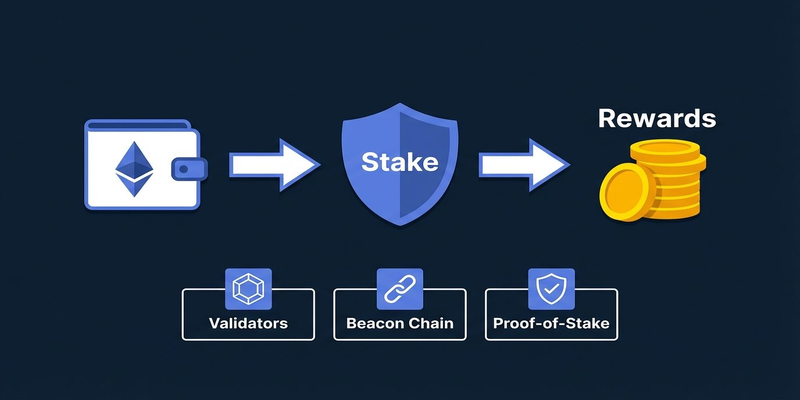
True portfolio growth happens when you treat your issued liquid token wrappers as active financial assets rather than static collectibles. The best ethereum staking protocols provide derivative assets that can be stacked across separate decentralized applications to capture multiple income layers simultaneously.
| Staking Layer Level | Capital Deployment Method | Resulting Financial Passive Output |
| Primary Layer | Deposit raw ETH into a decentralized pool. | Base Ethereum network validation rewards. |
| Secondary Layer | Restake liquid wrapper tokens into security modules. | Additional infrastructure service payouts. |
| Tertiary Layer | Supply reward tokens to automated market makers. | Decentralized transaction fee allocations. |
Structuring a resilient digital income framework
Building a sustainable crypto salary requires disciplined risk management and consistent capital diversification. Never concentrate your entire digital network footprint inside a single protocol dashboard, regardless of how attractive their promotional yields appear.
Spreading your capital across the best ethereum staking protocols protects your broader digital financial enterprise from sudden single points of failure. By combining secure blue-chip liquidity pools with decentralized restaking protocols, you can safely outpace traditional market inflation while your digital wealth compounds automatically over the long term.
Source: https://cryptoinsight.news
Category: News