
Passive income crypto nodes let you compound profits while you sleep. Stop trading time for money with these high-performance, automated node network setups.
- Are Fed Interest Rate Crypto Policies Stalling the Next Bull Run?
- Analyzing the Top Utility Tokens: Which Projects Offer Genuine Value?
- 12 Best Protocols to Earn Stablecoin Interest for Low-Risk Crypto Yields
- Deciphering Altcoin Season Indicator Charts: Key Metrics for 2026 Investors
- Best DePIN Crypto Projects: 11 Infrastructure Cryptos Dominating 2026
The dream of generating consistent cash flow without constantly trading hours for money is fully alive in the digital asset landscape. By utilizing passive income crypto nodes, investors are shifting from active trading to systemic accumulation. These digital entities validate transactions, store critical data, or route data packets while funneling rewards directly into your wallet.
Related: 14 Best Passive Income Crypto Nodes for Generating $500 a Month Automatically
This comprehensive list evaluates the premier networks providing scalable revenue streams through node operation in today’s digital economy.
Understanding the mechanics behind passive income crypto nodes
Before selecting a platform, it is crucial to understand how these machines generate profit automatically. Blockchains rely on decentralized infrastructure to survive, and they compensate node operators for providing necessary computing hardware, storage, and electricity.
[User Transaction] —> [Your Node Validates Data] —> [Network Emits Rewards]
Read More : 10 Best Crypto Staking Platforms to Build Consistent Monthly Passive Income Streams
To establish a system that safely delivers $500 monthly, you must calculate the exact cost of token collateral against the network’s current emission rate. Higher-tier setups often yield superior returns but demand a larger upfront financial commitment. When you deploy passive income crypto nodes, your machine works 24/7, turning computing uptime into automated revenue.
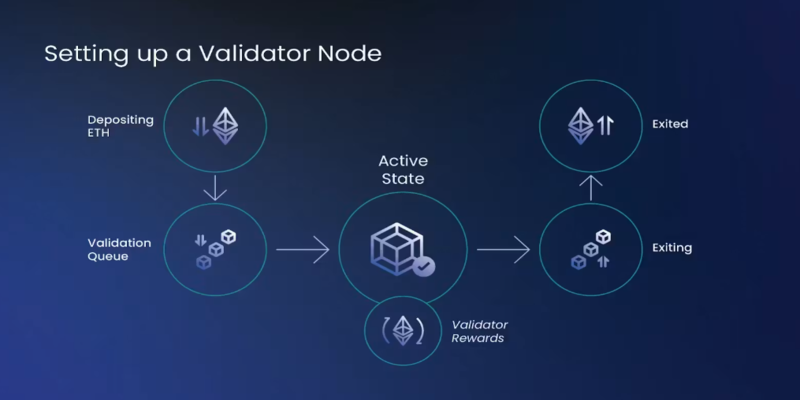
Evaluation criteria for choosing profitable node infrastructure
Not all networks provide sustainable yields over extended time horizons. To ensure your capital remains secure while maximizing daily distributions, always run potential setups through a strict evaluation checklist:
- Collateral Stability: The underlying asset must maintain healthy market liquidity so your rewards can be liquidated without severe price slippage.
- Hardware Requirements: Some platforms require heavy GPU infrastructure, while others allow lightweight cloud VPS hosting.
- Tokenomics and Emission Schedules: High block rewards are great, but aggressive inflation can quickly dilute the purchasing power of your automated earnings.
- Ecosystem Utility: Favor networks where the node performs a practical service, such as decentralized cloud computing or physical infrastructure routing.
Top 14 best passive income crypto nodes reviewed
The following list highlights the premier blockchain ecosystems where hosting a validation or service machine can yield highly reliable revenue. These passive income crypto nodes are divided by their functional utility and capital entry requirements.
| Network Name | Node Type | Estimated Entry Cost | Primary Operational Function |
| Ethereum | Validator | High (32 ETH) | Consensus validation and block creation |
| Avalanche | Validator | Mid-High (2000 AVAX) | Subnet security and processing |
| BNB Smart Chain | Validator | Very High (Institutional) | Transaction processing and scaling |
| Dash | Masternode | Mid-Tier (1000 DASH) | Instant transactions and governance |
| Flux | DePIN Cloud | Scalable Tiers | Web3 cloud hosting and server power |
| Helium | DePIN Wireless | Low (Hardware Kit) | Wireless IoT data packet routing |
| Render Network | GPU Node | Variable Hardware | 3D rendering and AI workloads |

Deep dive into layer-1 consensus validators
Securing foundational layers represents one of the most reliable methods to claim steady rewards. These passive income crypto nodes form the backbone of major decentralized financial ecosystems.
- Ethereum (ETH): The gold standard of staking nodes. It requires 32 ETH to run natively, providing highly predictable, low-risk consensus yields that institutional investors favor.
- Avalanche (AVAX): Operating an AVAX machine requires 2,000 tokens. This infrastructure gives operators exposure to the expanding enterprise subnet ecosystem.
- BNB Smart Chain (BNB): A highly elite tier requiring heavy backing. It offers premium, high-volume transaction fee distributions for top-tier network participants.
- Solana (SOL): Requires exceptional hardware specs and voting fees, but recaptures immense value through transaction fee splits and MEV (Maximal Extractable Value) optimization.
Lucrative masternodes with governance incentives
Masternodes perform secondary service functions beyond standard block validation. They typically pay higher yield percentages to compensate for extended lock-up periods.
- Dash (DASH): The pioneer of masternode systems. Holding 1,000 DASH tokens grants you voting power over the treasury alongside reliable block emission cuts.
- Syscoin (SYS): A unique hybrid network secured by Bitcoin’s mining hash rate. It rewards node owners with progressive seniority bonuses the longer the machine stays online.
- PIVX (PIVX): A user-friendly, privacy-centric network with low financial barriers, allowing retail investors to participate in governance rewards easily.
Decentralized physical infrastructure networks (DePIN)
DePIN represents a booming frontier where passive income crypto nodes connect to real-world resources. These systems reward you for providing physical computing power, data routing, or storage.
Read More : Is DeFi Dead? Deep-Dive Review of Institutional Decentralized Finance Platforms
[Idle Hardware/Storage] —> [DePIN Protocol Integration] —> [Real-World Enterprise Utility]
- Flux (FLUX): A decentralized cloud alternative to Amazon Web Services. Flux features multiple collateral tiers, letting you scale up your server operations as your profits increase.
- Render Network (RENDER): Allows you to rent out your idle computer graphics card power to studios worldwide for massive AI training and 3D rendering jobs.
- Filecoin (FIL): A massive enterprise-grade data storage grid that distributes consistent rewards to storage providers who maintain data integrity.
- Akash Network (AKT): A marketplace for cloud compute resources where node operators bid to host containers for Web3 applications.
- Theta Network (THETA): Focuses on optimizing global video streaming bandwidth by turning edge nodes into local relay stations.
- Helium (HNT): Operates physical hotspots to build a global wireless network for smart tracking and internet-of-things devices.
- Hivemapper (HONEY): A specialized mapping node setup where dashcam hardware tracks roads to build decentralized imagery maps.
Operational roadmap to configure your first automated cash flow node
Transforming capital into an active server requires careful technical execution. Follow this sequence to establish your passive income crypto nodes without exposing your private keys to security threats:
- Acquire the Necessary Collateral: Purchase the minimum required native tokens through a secure exchange and move them to a non-custodial wallet.
- Select Your Hosting Environment: Choose between setting up physical hardware at home or renting a virtual private server from a reliable cloud provider.
- Install the Core Daemon Software: Connect to your server using secure shell protocols and initialize the official blockchain client code.
- Synchronize and Stake: Allow your node to download the complete historical ledger, bind your collateral to the machine’s identity, and begin validating.
At CryptoInsight, we emphasize that running a machine is an active engineering responsibility. If your server goes offline for prolonged periods, the network may penalize your account, which directly reduces your automated monthly returns.
Crucial risk mitigation techniques for node operations
While building a $500 monthly passive machine is exciting, protecting your initial capital remains paramount. The largest threat to your passive income crypto nodes portfolio is asset volatility; if a token drops significantly in market price, it can easily erase your monthly yield gains.
| Operational Risk Factor | Direct Impact on Portfolio | Recommended Defensive Strategy |
| Token Price Depreciation | Reduces the absolute fiat value of your monthly rewards. | Diversify nodes across multiple distinct crypto sectors. |
| Server Downtime Penalties | Causes slashing events that consume your staked principal. | Utilize top-tier cloud hosting with 99.9% uptime SLAs. |
| Smart Contract Exploits | Can lead to complete theft of your deposited collateral. | Stick to mature, heavily audited legacy node networks. |
By enforcing this balanced approach, you insulate your broader cash flow machine from single points of failure. Ultimately, launching verified passive income crypto nodes allows you to outpace market inflation while your digital assets compound silently and automatically in the background.
Source: https://cryptoinsight.news
Category: News