
Best layer 2 crypto networks are essential for lower fees and faster speeds. Explore the top 7 projects that are redefining the future of blockchain.
- 5 Professional Settings for the Best Day Trading Indicators Today
- 3 Urgent Market Alerts: Breaking Crypto News Live Today
- Cold vs Hot Storage – Analyzing Key Custody Advantages and Disadvantages for Web3 Investors
- Crypto Presales High Risk Analysis: 5 Red Flags Compared in Modern Token Launches
- Best AI Crypto Coins Review: 3 Heavyweight Compute Networks Compared
The Ethereum network has long faced the “blockchain trilemma,” struggling to balance security, decentralization, and scalability. As transaction demand grows, the best layer 2 crypto projects have emerged as the primary solution. By moving execution off-chain while anchoring security to the mainnet, these protocols allow for a faster and more affordable digital economy.
Related: 7 Best Layer 2 Crypto Projects Transforming Ethereum Scalability in 2026
What Is Layer 2 Crypto and Why It Matters
A Layer 2 (L2) network acts as a secondary framework built directly atop a base blockchain, such as Ethereum. Its primary function is to process transactions off the main chain, which effectively alleviates network congestion and bypasses the limitations of the base layer.
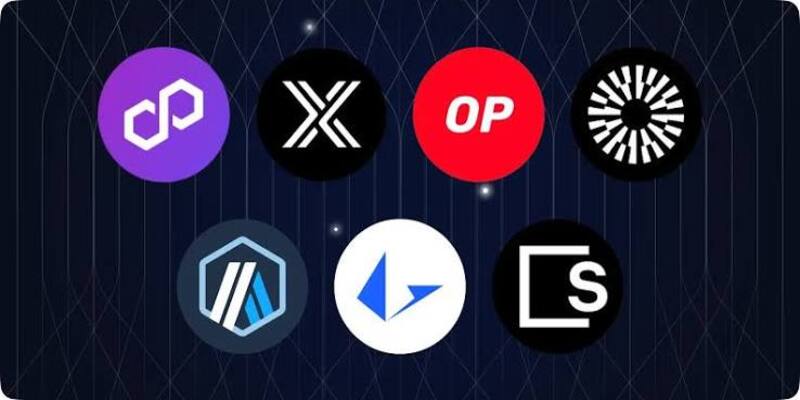
By executing transactions externally and only submitting compressed proofs back to the mainnet, these protocols achieve significantly higher throughput. This architecture ensures that the base layer remains secure while the best layer 2 crypto networks handle the heavy lifting of high-frequency data processing.
The importance of these scaling solutions cannot be overstated. Without them, the high cost and slow speeds of Layer 1 blockchains would remain a barrier to mass adoption, pricing out casual users and limiting the functionality of decentralized applications.
Essentially, best layer 2 crypto solutions bridge the gap between complex blockchain technology and everyday usability. They turn a slow, expensive ledger into a high-performance ecosystem, fueling the next wave of innovation in finance, gaming, and digital identity.
Ranking the 7 Best Layer 2 Crypto Ecosystems
In 2026, the scaling war is no longer defined by raw transaction speed but by ecosystem gravity. The best layer 2 crypto networks are those that successfully attract liquidity, builders, and daily active users, creating a self-sustaining cycle of growth.
Read More : 5 Undervalued Altcoins 10x vs Market Leaders: 2026 Review & Comparison
Selecting the right network depends on your specific needs, whether you are a DeFi power user, a builder, or a newcomer to the on-chain economy. The following table highlights the primary strengths of the current market leaders.
| Project | Primary Strength | Best For |
| Arbitrum | Deep DeFi liquidity | DeFi power users |
| Base | Consumer-friendly UX | Beginners & daily payments |
| Optimism | Modular OP Stack | Builders & Superchain scaling |
| Starknet | ZK-native architecture | High-performance compute |
| zkSync Era | Account abstraction | ZK-native smart accounts |
| Polygon | Multi-solution approach | Enterprise & gaming |
| Mantle | Modular high throughput | High-performance dApps |
Arbitrum remains the premier venue for complex financial activity, commanding the highest Total Value Locked due to its mature and composable dApp ecosystem. Meanwhile, Base has rapidly captured the consumer market by leveraging Coinbase’s massive distribution network, making it the most accessible entry point for everyday users.
Optimism is carving out a unique niche with its “Superchain” thesis, providing a standardized infrastructure that allows hundreds of chains to interoperate seamlessly. Conversely, ZK-rollups like Starknet and zkSync Era are gaining traction among developers who require cryptographic proof-based security and advanced features.
Ultimately, there is no single “winner” when identifying the best layer 2 crypto options. Arbitrum and Base currently dominate the transaction volume, but as interoperability improves, networks that prioritize developer friction reduction will lead long-term growth. Choose your network based on where the liquidity flows, as the best layer 2 crypto assets are found in ecosystems where you interact with dApps most frequently.
Evaluating Performance and Scalability Metrics
When reviewing these protocols, it is vital to look beyond marketing claims. Investors often prioritize best layer 2 crypto networks that demonstrate real-world adoption through consistent transaction volume and stablecoin flow. A network with high total value locked but low actual transaction activity is often a significant red flag for potential users.
Security remains a crucial differentiator when analyzing network health. While most projects derive their safety from Ethereum, some implementations carry different trust assumptions. Always verify if a project posts its state roots back to the Ethereum mainnet. If it does not, you are likely interacting with a separate chain rather than a true rollup.
Ultimately, performing deep due diligence is essential. You must examine on-chain data to confirm that a project is actually scaling the base layer effectively. Identifying the best layer 2 crypto solutions requires patience, but it ensures that your capital remains secure within high-performance environments that offer verifiable, transparent, and decentralized security guarantees.
Strategic Insights for Investing in Layer 2 Assets
Read More : 5 Best Crypto Hardware Wallets Classified by Custody Architecture
Successfully navigating the best layer 2 crypto market requires a balanced approach. Many of these projects have native governance tokens that serve as ecosystem incentives. However, investors should avoid buying purely for the sake of the token itself. Focus instead on the growth of the underlying network activity.
- Monitor daily active addresses to gauge real user adoption.
- Track developer count on GitHub to identify future upgrades.
- Watch for new integrations, especially in the RWA (Real-World Asset) and gaming sectors.
- Prioritize networks with strong “on-ramps” that simplify the entry process for new users.
When evaluating these assets, look for projects that show consistent growth in decentralized application deployment. Prioritizing networks with active community governance and transparent technical roadmaps will help you identify the best layer 2 crypto opportunities. This disciplined research approach is essential for maintaining a resilient and high-performing long-term investment portfolio.
On CryptoInsight, we emphasize that liquidity is king. A thriving ecosystem attracts more developers, which in turn brings in more users and capital. This flywheel effect is the strongest indicator of a project that will survive market volatility.
Navigating the Future of Decentralized Infrastructure
As 2026 unfolds, the scaling race shifts from raw transaction speed to seamless interoperability. The best layer 2 crypto projects will be those that communicate effortlessly across networks. Teams solving the “siloed liquidity” problem are poised to dominate the next growth phase, setting new standards for the entire digital economy.
The path toward a truly scalable blockchain remains a marathon, not a sprint. While current solutions have already reduced costs by over 90%, the ultimate goal is achieving global mass adoption. Investors must prioritize networks that emphasize robust security, developer experience, and clear, long-term utility for all participants.
Choosing the right path effectively positions you within this rapidly evolving landscape. Whether you are a trader or a builder, mastering these mechanics is essential for success. By focusing on the best layer 2 crypto assets, you align yourself with the core technologies powering the next generation of decentralized finance and applications.
Source: https://cryptoinsight.news
Category: News