
Cold vs hot storage parameters dictate your daily asset vulnerability. Evaluate the distinct infrastructure advantages and disadvantages before moving your funds.
- Ledger vs Trezor Review: 4 App Ecosystem Layers for Advanced Staking
- 4 Ways New Crypto Regulation Updates Will Impact Your Portfolio This Year
- Spot vs Futures Crypto Structural Factors: Analyzing Risks and Rewards
- Real World Asset Tokens Analysis: 3 Hidden Gems Outperforming Large-Caps
- Tracking Big Money: A Guide to Using Whale Wallet Tracker Alerts Effectively
Cold vs hot storage infrastructure selections establish the foundation for any robust cryptocurrency risk management strategy. Cryptographic asset management requires a continuous trade-off between instant liquidity and long-term network security boundaries. Understanding how these two distinct custody methodologies manipulate private key environments protects your portfolio from catastrophic protocol exploits.
Related: Cold vs Hot Storage – Analyzing Key Custody Advantages and Disadvantages for Web3 Investors
Without a structured key segregation strategy, web3 participants frequently risk exposing their primary capital to automated draining scripts. This architectural evaluation of cold vs hot storage balances provides the technical breakdowns required to secure your digital footprint effectively.
Evaluating Infrastructure Advantages and Disadvantages of Cold vs Hot Storage
Navigating the web3 landscape requires an objective analysis of how online and offline environments hold critical validation data. The fundamental differences in cold vs hot storage setups lie in their physical exposure to active network sockets. Hot wallets maintain continuous internet connectivity to maximize transaction processing speeds. Conversely, cold storage relies on complete hardware isolation to block remote code execution.

Evaluating these contrasting methodologies requires assessing your personal trading frequencies alongside your tolerance for systemic smart contract risks. Both architectures serve specific functional roles within a mature portfolio deployment.
Hot Storage Parameters
- Primary Advantage: Delivers frictionless connectivity to decentralized applications, automated yield optimization protocols, and non-fungible token minting platforms.
- Secondary Advantage: Provides zero-fee localized environment generation, allowing users to spin up multiple distinct profiles instantly.
- Core Disadvantage: Keeps raw cryptographic private keys stored directly within browser memory pools or local app cache registries, increasing exposure to background malware.
Cold Storage Parameters
- Primary Advantage: Keeps your private recovery keys completely isolated inside a specialized hardware secure element, ensuring keys never interact with an online operating system.
- Secondary Advantage: Requires explicit, physical on-device button confirmations to approve transaction payloads, rendering remote digital hijacking scripts useless.
- Core Disadvantage: Introduces physical handling delays and upfront equipment procurement costs, reducing your ability to react instantly to microsecond market movements.
| Security Attribute | Hot Storage Frameworks | Cold Storage Systems |
| Network Perimeter | Continuously exposed to active web connections | Fully isolated via physical air-gaps or USB bridges |
| Attack Vector Profile | Vulnerable to clipboard malware and phishing | Restricted to physical theft or supply-chain entry |
| Signing Mechanism | Local application or browser environment script | Physical microprocessor on-device button activation |
Comprehensive Comparative Matrices for Key Custody Mechanisms
Read More : Best AI Crypto Coins Review: 3 Heavyweight Compute Networks Compared
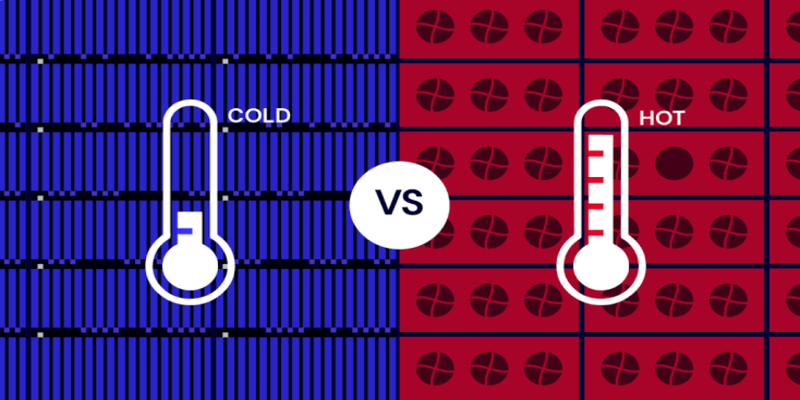
A granular look at cold vs hot storage mechanics reveals how data formatting shifts between hot transport layers and cold verification baselines. Hot systems prioritize immediate accessibility, utilizing hot web sockets to continuously read address balances. Cold systems treat data transmission as a unidirectional security gateway, exporting signed payloads while locking private keys inside.
To track emerging protocol vulnerabilities and read real-time smart contract security logs, checking the digital asset research matrix on CryptoInsight will help optimize your active defense layout. Combining these two storage types creates an effective defense-in-depth security model.
| Operational Workflow | Hot Storage Ecosystems | Cold Storage Infrastructure |
| ** dApp Connectivity** | Native browser extension linking | Manual hardware bridge authorization |
| Gas Fee Optimization | Automated local software estimation | On-device payload validation checks |
| Seed Phrase Risk | High vulnerability to local screen scraping | Zero digital footprint during creation |
Balancing cold vs hot storage variables determines your baseline resistance against remote contract exploits. While hot interfaces simplify short-term transactional movements, cold physical nodes protect your underlying capital layers from automated digital drainers. Merging both frameworks ensures you maintain optimal portfolio agility without exposing your master cryptographic keys to web vulnerabilities.
Strategic Selection Criteria for Web3 Asset Allocation
Balancing your use of cold vs hot storage profiles depends heavily on your capital distribution and daily operational volume. Institutional treasuries and long-term holders require maximum cold isolation to survive prolonged industry exploits. Meanwhile, active daily swing traders need the immediate execution speeds provided exclusively by unhardened software connections.
Dividing your portfolio into operational brackets minimizes your overall attack surface. This methodology ensures that an unexpected front-end application exploit cannot liquidate your primary generational wealth.
- The 80/20 Capital Separation Rule: Dedicate 80% of your total net worth to cold hardware vaults while leaving 20% or less in hot wallets for active decentralized finance interaction.
- Smart Contract Risk Profiling: Use hot systems exclusively for interactions with highly liquid, thoroughly audited blue-chip protocols.
- Physical Redundancy Thresholds: Implement multi-signature cold setups once your digital holdings surpass your personal financial risk limits.
Step-by-Step Technical Guide for Executing Secure Cross-Storage Transfers
Moving your capital between cold vs hot storage nodes requires systematic procedural hygiene to prevent human error during transmission. Follow this technical configuration roadmap to route your assets through secure pipelines without leaving your data vulnerable to interception.
Step 1: Cleanse Your Local Operating Environment
Read More : Revoke Smart Contract Permissions (EVM & Solana): 5 Emergency Dashboards Evaluated
Before launching any wallet interface, terminate all non-essential background applications and clear your browser’s clipboard history cache. This initial step lowers the risk of active memory-scraping tools monitoring your operational behavior.
Step 2: Initialize Your Target Cold Address
Power on your cold hardware device and extract the target deposit public address directly from the physical device screen. Never copy the deposit address from an unverified software companion application dashboard.
Step 3: Initiate a Low-Value Test Transfer
Open your active hot storage application and paste the verified hardware public address into the recipient parameter field. Execute a minimal test transaction to confirm the network routing behaves exactly as expected before moving large sums.
Step 4: Finalize the Primary Capital Migration
Once the test transaction registers on an open blockchain explorer, approve the remaining balance transfer. Monitor the transaction progress using local block telemetry rather than keeping your hot wallet panel permanently open.
- Address Book Hardening: Save your verified cold storage destination paths inside your hot wallet’s local registry to prevent copy-paste errors.
- Network Verification: Double-check the active chain ID parameters before broadcasting data packets across different layer-two execution structures.
- Session Termination: Disconnect all active decentralized application sessions immediately after completing your daily capital allocation workflows.
Systematic management of cold vs hot storage nodes eliminates the structural vulnerabilities that malicious actors rely on during target identification. Treating online application spaces as temporary transit vectors preserves your portfolio’s integrity over long horizons. By maintaining rigorous isolation habits and matching your storage choices to your specific transactional needs, you can navigate the web3 environment safely.
Source: https://cryptoinsight.news
Category: News