
Best crypto hardware wallets must balance air-gapped isolation with active dApp connectivity. Review 5 top-tier cold storage choices for your portfolio.
- Crypto Presales High Risk Analysis: 5 Red Flags Compared in Modern Token Launches
- The Correction Explained: Why Is Crypto Dropping So Fast?
- 5 Professional Settings for the Best Day Trading Indicators Today
- Best AI Crypto Coins Review: 3 Heavyweight Compute Networks Compared
- 4 Steps to Master Your Portfolio Using a Crypto DCA Calculator
The evolution of digital asset self-custody has made choosing the best crypto hardware wallets a critical priority for long-term investors. Investors no longer judge cold storage purely by brand reputation or aesthetic design. Instead, security analysts evaluate physical signers based on their underlying custody architecture, which dictates how private keys are generated, isolated, and utilized to sign blockchain transactions. Choosing an optimal device requires matching your trading frequency with the correct architectural framework.
Related: 5 Best Crypto Hardware Wallets Classified by Custody Architecture
Relying on a flawed setup can leave gaps in your operational security, which is why researching the best crypto hardware wallets involves examining how different devices handle key isolation, connectivity, and firmware auditability. Different frameworks handle transaction data in entirely distinct ways. This CryptoInsight deep dive categorizes the market’s elite solutions to help you select a device that perfectly aligns with your technical requirements.
Understanding Custody Architecture in the Best Crypto Hardware Wallets
Custody architecture refers to the internal structural design of a hardware signer. When evaluating the best crypto hardware wallets, this architecture dictates the physical processing chips, the open or closed nature of the operating code, and the communication channels used to transmit transaction data. Security standards are determined by how effectively these components isolate your mnemonic seed phrases from online vectors.

- Secure Element (SE) Architecture: Relies on dedicated, tamper-resistant microchips certified to withstand physical attacks.
- Open-Source MCU Architecture: Prioritizes absolute code transparency and community-driven vulnerability audits over proprietary silicon.
- Multi-Chip Distributed Architecture: Splits cryptographic operational responsibilities across multiple independent security layers.
| Architectural Type | Primary Protection Layer | Communication Channel | Ideal Target User |
| Secure Element | Certified Tamper-Proof Chips | USB-C, Bluetooth, NFC | Active DeFi and Multi-Chain Investors |
| Open-Source MCU | Transparent Auditable Firmware | USB-C | Privacy Purists and Audit Advocates |
| Air-Gapped Pure | Visual QR Data Exchange | Zero Radio Frequency Emissions | Ultra-High-Net-Worth Long-Term Holders |
| Seedless MPC/NFC | Hardware Token Sharding | Proximity NFC Taps | Mobile-First Everyday Traders |
Five Best Crypto Hardware Wallets Classified by Custody Architecture
Read More : 4 Ways New Crypto Regulation Updates Will Impact Your Portfolio This Year
To optimize your security posture, you must evaluate devices through their specific architectural categories. Each framework introduces distinct defensive boundaries and operational trade-offs. Here are the five best crypto hardware wallets categorized by their internal structural systems.
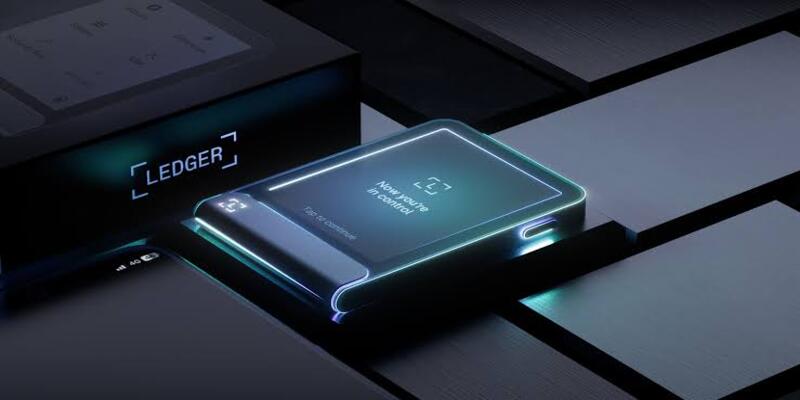
Ledger Flex: The Secure Element Industry Standard
The Ledger Flex represents the pinnacle of certified hardware isolation. It utilizes a CC EAL6+ certified Secure Element chip designed specifically to protect cryptographic keys from physical tampering and laboratory-grade side-channel attacks. This architecture routes all visual data and touch inputs directly through the secure chip, ensuring the device screen cannot be hijacked by malicious software. It balances this rigid isolation with versatile Bluetooth and NFC connectivity for mobile-first decentralized application routing.
Trezor Safe 7: The Open-Source Auditable Champion
For users who reject proprietary code, the Trezor Safe 7 stands as the premier open-source hardware signer. Its entire firmware stack and hardware blueprint are completely public and auditable on GitHub, allowing universal verification of its cryptographic entropy. The Safe 7 architecture features an EAL6+ secure element to mitigate physical attacks while implementing advanced Shamir Backup standards to split recovery seeds into multiple distributed shares. It runs without wireless radios, maintaining a minimal physical attack surface.
SafePal S1 Pro: The Air-Gapped Pure Isolation Model
The SafePal S1 Pro is engineered for absolute network perimeter isolation. Its custody architecture is completely air-gapped, meaning it contains zero components for Bluetooth, Wi-Fi, NFC, or cellular connectivity. Data exchange occurs entirely through visual verification via an integrated camera scanning dynamic QR codes. The private keys remain completely isolated inside a CC EAL6+ secure chip, completely eliminating remote exploitation paths.
OneKey Pro: The Multi-Chip Distributed Framework
Taking a highly unique approach to physical protection, the OneKey Pro distributes its custody architecture across four independent EAL6+ secure chips. Instead of relying on a single piece of silicon, cryptographic signing operations require distributed execution across multiple hardware boundaries. This redundant structure ensures that compromising a single chip is insufficient to reconstruct the private keys. It provides power users with broad multi-chain compatibility alongside extreme hardware redundancy.
Tangem Wallet: The Seedless NFC Architecture
Read More : 4 Best Gaming Crypto Coins to Accumulate as Web3 Infrastructure Scales
The Tangem Wallet completely disrupts traditional recovery paradigms by eliminating paper seed phrases entirely. Its architecture utilizes an industrial-grade NXP SE050 EAL6+ secure element embedded within a sleek, durable plastic card. Keys are generated directly on the internal chip during initial setup and are mathematically backed up across a set of two or three companion cards via encrypted NFC proximity transfers. This layout completely bypasses the risk of physical seed phrase theft or manual transcription errors.
Advanced Cryptographic Protection Metrics
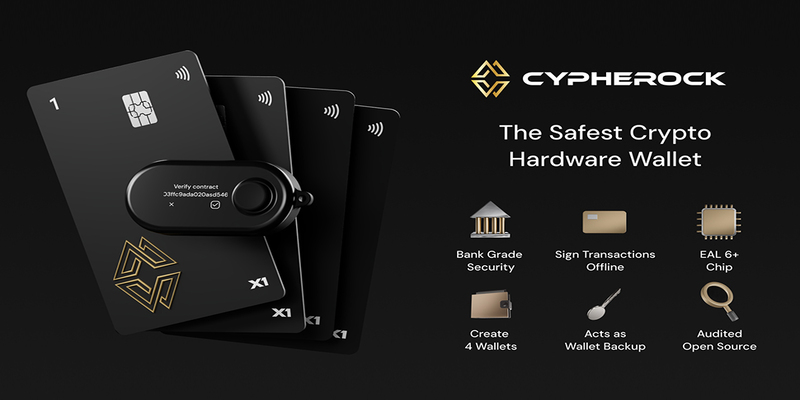
Evaluating the best crypto hardware wallets requires analyzing their core encryption protocols and data retention capabilities. Physical hardware layout means very little if the internal chip cannot maintain high levels of cryptographic entropy. Modern signers use precise hardware-based true random number generators to eliminate predictability during key generation.
- True Random Number Generation (TRNG): Hardware-driven entropy sources that ensure private keys cannot be reverse-engineered or predicted.
- Passphrase Encryption Layers: BIP39 extensions that create distinct, hidden storage vaults using a user-specified string of characters.
- Anti-Tamper Self-Destruct Mechanisms: Structural logic traces that erase all internal memory if the physical casing is forced open.
| Security Characteristic | Technical Standard | Practical Defense Benefit |
| Entropy Sourcing | AIS31 Class PTG.2 TRNG | Prevents mathematical prediction of master keys |
| Physical Defense | Active Shield Silicon Grids | Renders microscopic probe attacks ineffective |
| Data Retention | Ferroelectric RAM (FRAM) | Preserves structural key data for up to 200 years |
| Verification Flow | Cryptographic Clear-Signing | Eradicates malicious smart contract blind-signing |
Constructing an Uncompromising Storage Setup
Before committing any significant capital to a cold storage address, always perform a complete verification cycle on the device. Ensuring your backup architecture is functional saves your assets from unexpected physical damage or device loss.
- Checklist Item 1: Purchase your device directly from the official manufacturer to prevent supply-chain modification attacks.
- Checklist Item 2: Generate your private keys completely offline and verify the integrity of the true random number generation.
- Checklist Item 3: Perform a small test transaction and execute a full recovery drill using your backup hardware or metal sheets.
- Checklist Item 4: Securely isolate your hardware backups in independent geographic locations to prevent localized environmental destruction.
By aligning your investment profile with the correct custody architecture, you remove single points of failure from your self-custody system. Always prioritize hardware-level key isolation to ensure your digital wealth remains secure using the best crypto hardware wallets.
Source: https://cryptoinsight.news
Category: News