
Solana vs ethereum fees enter the review arena. We look beyond basic transaction costs to analyze network inflation, priority queues, and scale.
- 4 Ways New Crypto Regulation Updates Will Impact Your Portfolio This Year
- 15 Safest Non Custodial Wallets Featuring Advanced Clear-Signing Shields
- The Correction Explained: Why Is Crypto Dropping So Fast?
- Deciphering Altcoin Season Indicator Charts: Key Metrics for 2026 Investors
- Solana Yield Farming Guide: 7 Strategic Rules to Build Permanent Passive Income Streams Safely
Solana vs ethereum fees represent the most critical metric for decentralized applications entering the 2026 web3 ecosystem as execution costs dictate user adoption. As global transactional volumes reach new macro peaks, developers and retail capital find themselves balancing economic trade-offs between two completely different core architectures. The ongoing competition over execution overhead is forcing users to evaluate whether structural data availability or raw parallelization provides the optimal environment for capital efficiency.
Related: Solana vs Ethereum Fees Compared: The Blockchain Gas Infrastructure Face-Off
This extensive evaluation directly contrasts the base operational environments of the industry’s two premier smart contract platforms. The Project Reviews team at CryptoInsight has analyzed these competing execution environments to help you understand how network structural overhead influences your deployment costs. Our evaluation unmasks the underlying realities of gas frameworks to separate short-term marketing metrics from long-term computational sustainability.
Unpacking the mechanics of solana vs ethereum fees in modern web3

The primary divergence when evaluating solana vs ethereum fees centers on how each blockchain manages its finite block space during periods of high demand. Ethereum treats layer-1 block space as a premium, highly secure auction house where users must compete globally for transaction inclusion. This demand-driven framework naturally elevates standard execution costs when the network experiences sudden spikes in decentralized exchange activity.
Read More : Analyzing the Top Utility Tokens: Which Projects Offer Genuine Value?
Conversely, Solana approaches computational throughput by dramatically scaling base layer capacity to keep transaction costs completely negligible. Instead of forcing every single smart contract to compete for the exact same pipeline, its parallel execution engine isolates localized fee spikes effectively. This structural choice ensures that a sudden minting frenzy in one application does not artificially inflate the operational cost of unrelated token transfers across the broader network.
- Localized fee markets: Solana isolates computational congestion so that high demand for a specific token mint does not impact general transfers.
- Global auction pricing: Ethereum forces all smart contract operations into a single competitive pool, creating baseline fee variance.
- Predictable microtransactions: The ability to execute thousands of sequential operations for fractions of a cent makes certain web3 models economically viable.
Understanding the deep structural nuances of solana vs ethereum fees requires looking closely at how computational work is tracked and monetized by validators. Cheap token prices are frequently confused with optimized gas infrastructure, but actual architectural differences determine long-term fee sustainability. When global demand scales rapidly, the underlying fee distribution rules dictate exactly how much capital stays within user wallets.
Structural data comparison between layer-1 computational frameworks
To construct an objective comparison, we must analyze the specific metrics that govern transaction pricing across both leading layer-1 ecosystems. The following data breakdown displays the financial realities of live mainnet performance.
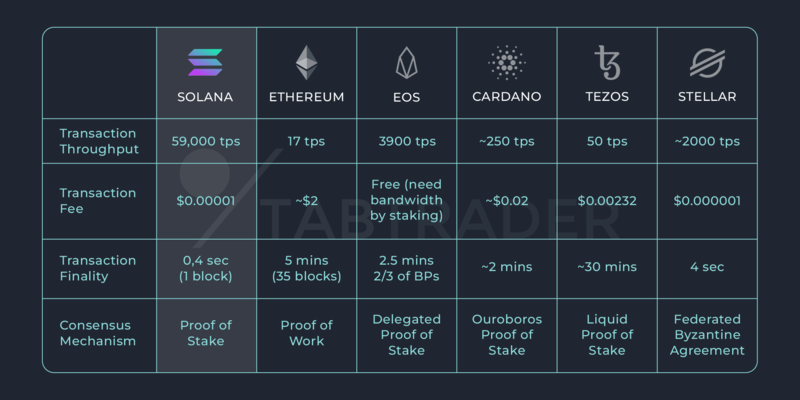
| Execution Metric | Ethereum Layer-1 Framework | Solana Monolithic Architecture |
| Average Transaction Cost | $1.00 – $20.00 (Highly Congestion-Dependent) | $0.00025 – $0.01 (Consistently Sub-Cent) |
| Gas Pricing Unit | Gwei (10−9 ETH) | Lamports (10−9 SOL) |
| Fee Structure Design | EIP-1559 (Dynamic Base Fee + Priority Tip) | Fixed Base Fee (5,000 Lamports) + Priority Fees |
| Economic Token Impact | 60% – 70% of Base Fee is Burned (Deflationary) | 50% Fee Burned / 50% Distributed to Validators |
| Real-World Throughput | 15 – 30 Transactions Per Second | 2,500 – 3,700 Transactions Per Second |
| Scaling Philosophy | Modular Ecosystem (Offloading to Layer-2 Rollups) | Monolithic Layer-1 Parallelization (Sealevel Engine) |
Analyzing these performance metrics explains why decentralized finance participants closely monitor solana vs ethereum fees before committing liquidity. While Ethereum relies heavily on its modular roadmap to lower operational costs through secondary rollups, Solana executes all operations directly on its base layer. This eliminates the frictional costs associated with bridging assets across multiple isolated execution environments.
Architectural impact on general user transaction costs
The practical reality of solana vs ethereum fees becomes highly visible when executing complex multi-step smart contract actions like decentralized token swaps. On Ethereum, a basic swap requires substantial computational gas units because the EVM must process state changes sequentially. When network traffic increases, these individual actions easily compound into double-digit dollar expenses for a single confirmation.
Read More : 4 Best Gaming Crypto Coins to Accumulate as Web3 Infrastructure Scales
Solana leverages its custom Sealevel mechanism to process thousands of distinct smart contract executions simultaneously across available hardware threads. Because the network demands highly specialized validator hardware, it can maintain near-zero base fees while providing sub-second finality. This structural design drastically reduces the barrier to entry for casual retail market participants who cannot afford premium network fees.
- Complex smart contracts: Heavy execution tasks like algorithmic multi-hop routing remain highly expensive on native Ethereum layer-1.
- NFT minting efficiency: Launching thousands of digital collectibles costs a fraction of a dollar on Solana compared to volatile gas wars on alternative chains.
- Liquidity provision: Frequent adjustments to automated market maker positions are highly practical when execution penalties are virtually nonexistent.
The ongoing evaluation of solana vs ethereum fees highlights a fundamental philosophical trade-off between absolute decentralization and high-performance scalability. Ethereum maintains lower hardware constraints to ensure an expansive, globally distributed validator set at the cost of execution performance. Solana optimizes entirely for raw throughput and minimal cost, accepting a more concentrated infrastructural footprint to achieve global execution speed.
Strategic financial implications for developers and web3 treasuries
Choosing where to deploy application infrastructure requires an accurate projection of ongoing computational maintenance and user onboarding costs. High transactional barriers naturally stifle user retention and prevent the widespread implementation of automated micro-payment mechanics. For consumer-facing products like Web3 gaming or decentralized social media, gas architecture dictates the entire product roadmap.
- Onboarding friction: Low base execution costs allow applications to seamlessly absorb user gas fees behind simple web2 interfaces.
- Protocol overhead: Maintaining automated on-chain oracle updates or liquidations becomes prohibitively expensive when base network layers experience chronic congestion.
- Yield optimization: Compounding small staking rewards or automated fee collections is highly efficient when ledger interaction penalties are minimized.
Ultimately, evaluating solana vs ethereum fees demonstrates that neither network serves as a universal solution for every financial use case. High-value institutional settlements and complex governance structures often prefer Ethereum due to its historical economic security and deep pool stability. However, for high-frequency trading platforms, consumer applications, and fast-moving web3 products, Solana provides the economic environment necessary to scale sustainably in 2026.
Source: https://cryptoinsight.news
Category: News