
Safest non custodial wallets minimize blind-signing vulnerabilities during dApp interactions. Benchmark 15 high-security Web3 interfaces for multi-chain protection.
- 10 Proven Steps to Recover Lost Crypto Wallet and Restore Access
- 4 Trading Mistakes a Bitcoin Liquidation Heat Map Helps You Avoid
- Best DePIN Crypto Projects: 11 Infrastructure Cryptos Dominating 2026
- Lend Crypto for Interest: How Beginners Lose Money in Decentralized Money Markets
- Top 5 Multi Chain Crypto Wallet Choices to Master Web3 Networks
Safest non custodial wallets are now the absolute standard for serious crypto investors who demand true digital ownership over their private keys. However, as decentralized applications (dApps) expand, traditional software interfaces expose users to severe transaction spoofing. Selecting the right setup requires evaluating their advanced clear-signing screens alongside raw chip security.
Related: 15 Safest Non Custodial Wallets Featuring Advanced Clear-Signing Shields
Without clear visual confirmation, you run the risk of blind-signing malicious code that can drain your entire balance instantly. This review analyzes fifteen tier-one self-custody systems engineered to counter modern smart contract threats, helping you determine the safest non custodial wallets for your specific investment portfolio.
Evaluating the 15 Safest Non Custodial Wallets
Modern cold storage and application suites have evolved to create intuitive defense shields for your digital assets. The safest non custodial wallets on the market today provide robust transaction parsing layers to eliminate malicious smart contract interactions.

- Ledger Flex: Features a high-resolution secure screen designed to eliminate blind-signing vulnerabilities during dApp connectivity.
- Trezor Safe 5: Combines an EAL6+ secure element with a fully open-source codebase for maximum public auditability.
- Zengo Pro: Utilizes advanced Multi-Party Computation (MPC) to eliminate single points of failure without seed phrase risks.
- ELLIPAL Titan 2.0: Offers a fully air-gapped environment that transmits raw transaction data exclusively via secure QR code scans.
- Tangem Wallet 2.0: Uses a seedless, bank-card form factor powered by an EAL6+ microprocessor with secure NFC communications.
- ColdCard Mk4: A hyper-focused, Bitcoin-only hardware vault featuring isolated dual secure elements and true air-gapped operation.
- SafePal S1 Pro: Provides affordable air-gapped security utilizing QR codes alongside an integrated active anti-tamper self-destruct mechanism.
- MetaMask (with Snaps Shield): The dominant Web3 gateway, now enhanced with automated transaction simulators to catch phishing links.
- Phantom Multi-Chain: Delivers intuitive visual transaction previews natively across Solana, Bitcoin, and EVM network protocols.
- FoxWallet: A multi-chain, security-first option optimized for emerging layer-one ecosystems and real-time smart contract auditing.
- Coinbase Wallet: A software-based option providing gasless transactions on Layer 2s backed by localized biometric device encryption.
- OKX Web3 Wallet: An advanced multi-chain super-app featuring comprehensive integrated tools for yield optimization and airdrop hunters.
- Rabby Wallet: Built exclusively for EVM chains, it simulates precisely how your balances will change before you sign.
- Trust Wallet (SWIFT): Leverages smart contract account abstraction to provide advanced security scanners and simplified gas fee choices.
- Exodus Desktop: Pairs an elegant portfolio visualization panel directly with Trezor hardware architectures for secure local desk storage.
| Wallet Model | Core Architecture | Connectivity Protocol | Primary Anti-Phishing Shield |
| Ledger Flex | Hardware (Secure Chip) | USB-C / Bluetooth | On-Screen Clear-Signing Engine |
| Trezor Safe 5 | Hardware (Open-Source Element) | USB-C | Shamir Backup Protocol |
| Zengo Pro | Software (MPC Framework) | Mobile Application | Biometric Facial Scanning Locks |
| ELLIPAL Titan 2.0 | Hardware (Air-Gapped) | Visual QR Codes | Total Physical Offline Isolation |
| Tangem Wallet 2.0 | Hardware (NFC Card) | Wireless NFC | Chip-to-Chip Backup Redundancy |
Detailed Technical Review and Clear-Signing Diagnostics
Read More : Are Fed Interest Rate Crypto Policies Stalling the Next Bull Run?
Deploying the safest non custodial wallets requires understanding how their software layers present transaction telemetry. Ledger and Trezor approach this challenge from different design philosophies. Ledger relies on specialized internal apps to decode transaction details, whereas Trezor relies on open-source firmware community updates.
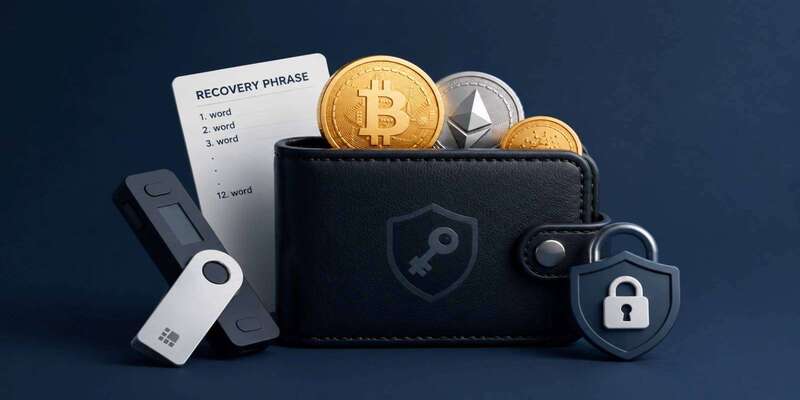
To tracking emergent vulnerabilities and review real-time security alerts, visiting the technical research library on CryptoInsight will keep your operational framework ahead of hackers. Software options like Rabby and MetaMask rely heavily on local machine sandboxing to keep background code isolated.
- Decoupled Data Verification: True security requires that transaction details on your hardware device match your computer screen exactly.
- Mempool Backlog Protection: High-tier applications provide automated gas optimization to prevent transaction trapping exploits during network spikes.
- Local Key Cryptography: Your private seeds are encrypted locally using the hardware’s secure enclave, never exposing raw strings to standard RAM blocks.
Crucial Implementation Parameters for Long-Term Asset Protection
Selecting one of the safest non custodial wallets is only half the battle. Your security posture depends on your physical environment and operational habits. Even the most advanced clear-signing shield cannot prevent losses if you input your recovery phrase into a fake website.
When configuring your storage system, make sure to minimize your attack surface across all active endpoints. If you choose to manage your assets via an app framework, avoid clicking unverified links in social channels.
- Isolate Your Production Keys: Never take photos, screenshots, or digital cloud backups of your core seed strings under any circumstances.
- Verify Smart Contract Allowances: Routinely utilize approval revocation dashboards to clean out legacy spending permissions on older dApps.
- Audit Your Device Health: Inspect your hardware wallet housing regularly for physical entry marks or signs of supply-chain tampering.
Advanced Account Abstraction and Multi-Chain Security Evolution
Read More : Cold vs Hot Storage – Analyzing Key Custody Advantages and Disadvantages for Web3 Investors
Evaluating the safest non custodial wallets requires looking at how next-generation smart contract wallets handle user transactions. Traditional self-custody systems rely entirely on a single cryptographic seed phrase, which creates an immediate single point of failure. Modern architectures use account abstraction to replace these fragile phrases with decentralized web security layers.
These advanced multi-chain platforms implement customizable programming directly into the underlying account layer to establish the safest non custodial wallets infrastructure. Rather than relying on static security protocols, your wallet interface dynamically scales its defenses based on real-time on-chain risk calculations.

- Social Recovery Ecosystems: Allow trusted contacts or alternative devices to reconstruct wallet permissions securely without exposing raw master seed fragments.
- Batch Transaction Packing: Combines multiple smart contract interactions into a single atomic execution, reducing gas overhead and minimizing exposure windows.
- Automated Risk Filtering: Leverages cloud-based security networks to cross-check destination contract addresses against global malicious domain registries instantly.
Selecting the safest non custodial wallets means picking platforms that balance this technical programmability with audited execution frameworks. When these programmatic rules are properly configured, your daily Web3 operations are fully shielded from standard extraction malware vectors.
Ultimate protection relies on speed and structural isolation rather than luck. Utilizing the safest non custodial wallets serves as your primary defense playbook to help you configure your system before total liquidation risks occur. Proactive defense means assuming every smart contract interaction carries a potential risk.
By executing immediate revocations, utilizing clear-signing screens, and maintaining air-gapped storage barriers, you protect your portfolio from evolving digital drainers. Turn these tactical response methods into standard habits to secure your digital assets for the long haul.
Source: https://cryptoinsight.news
Category: News