
Liquid staking vs restaking represents one of the most significant architectural evolutions within decentralized finance (DeFi), driving a massive shift in how capital efficiency is calculated.
- 5 Quantitative Rules for Crypto Leverage Risk Management in Volatile Markets
- RSI MACD Crypto Trading: How to Validate Breakouts and Avoid Fakeouts
- 4 Steps to Master Your Portfolio Using a Crypto DCA Calculator
- Crypto Technical Analysis Beginners: Mastering Market Trends and Structure
- Spot vs Futures Crypto Structural Factors: Analyzing Risks and Rewards
In earlier iterations of blockchain networks, securing a proof-of-stake chain meant locking up native tokens, sacrificing immediate liquidity for predictable validation rewards.
Related: Liquid Staking vs Restaking: Which Yield Engine Dominates 2026?
Today, institutional and retail market participants are no longer satisfied with single-layer yields. This has sparked an intense debate over which asset-repurposing model offers the optimal balance of return and network security.
Core Architectural Differences in the Liquid Staking vs Restaking Debate
Understanding the divergence between these two financial primitives requires looking at where the underlying collateral is deployed.
Liquid staking functions by allowing a user to deposit a native asset—such as Ethereum or Solana—into a specialized protocol, which then stakes those assets on behalf of the user.
In return, the protocol issues a Liquid Staking Token (LST), representing a claim on the principal and the accrued validation rewards.
This system solves the capital lock-up dilemma, keeping the primary network secure while freeing up tokenized receipts to circulate throughout external financial applications.
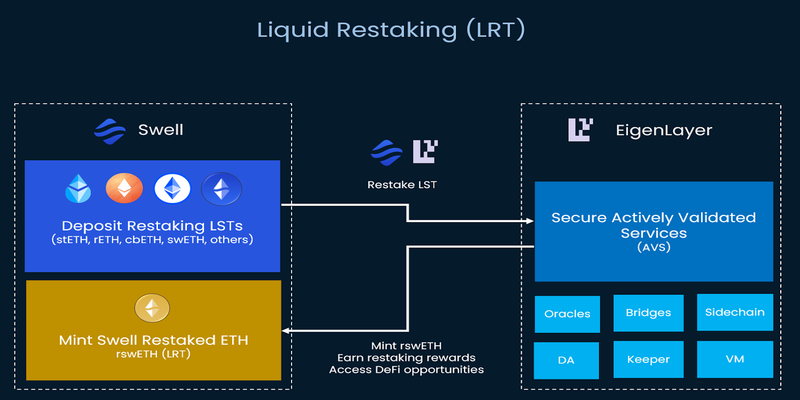
Restaking takes this foundation and expands the security perimeter to entirely different software layers.
Pioneered by specialized platforms, restaking allows users to take their already-staked assets or their minted LSTs and allocate them to secure secondary decentralized services, known as Actively Validated Services (AVSs).
- These AVSs can include cross-chain bridges.
- They can also encompass decentralized oracle networks.
- Data availability layers frequently utilize this shared security.
The introduction of Liquid Restaking Tokens (LRTs) ensures that even at this secondary tier, capital remains tradeable.
Read More : 4 Trading Mistakes a Bitcoin Liquidation Heat Map Helps You Avoid
For platforms operating in highly interactive digital ecosystems, such as MCW88, understanding these structural layers is vital, as modern digital platforms increasingly look toward decentralized infrastructure to back their transaction systems.
Evaluating Yield Structures: How Liquid Staking vs Restaking Generates Revenue
When analyzing financial performance, the distinction lies in the stacking of incentive mechanisms.
Liquid staking protocols generate a reliable, steady yield derived directly from the base layer’s inflationary emissions and transaction fees.
Because the risk is tied directly to the native blockchain’s survival, the annual percentage yield (APY) tends to remain stable, hovering around three to four percent for mature networks.
The primary appeal here is simplicity and deep integration, as major LSTs can be used as collateral across almost every major lending market.
Restaking fundamentally alters this equation by introducing multi-layered yield generation.
A restaker continues to collect the original base-layer validation rewards, but simultaneously earns additional fees paid out by the various AVSs utilizing that pooled economic security.
- Investors benefit from the core network staking rewards.
- Additional revenue streams come from secondary validation fees.
- Protocols often distribute extra governance tokens as incentives.
This compounding effect can push total yields significantly higher, often reaching double-digit returns depending on market demand for shared security.
This structural approach represents a major shift analyzed frequently on CryptoInsight, demonstrating how capital efficiency can be magnified when a single digital asset performs multiple security roles at once.
Risk Profiles and Smart Contract Vulnerabilities: Liquid Staking vs Restaking Compared
The pursuit of maximized yield naturally introduces heightened systemic vulnerabilities that market participants must carefully weigh.
Read More : 5 Strategic Steps on How to Trade Crypto Options with Lower Risk
Liquid staking carries a relatively straightforward risk profile centered on smart contract bugs, operator mismanagement, and potential base-layer slashing if a validator acts maliciously or goes offline.
Secondary market de-pegging is also a factor, as sudden liquidity crunches can cause the market price of an LST to temporarily diverge from its underlying net asset value.
Restaking, conversely, introduces compounded systemic risk, often referred to as financial leverage on security.
Because the same capital is backing multiple distinct services simultaneously, a failure or a programmatic vulnerability in one AVS can trigger a cascading slashing event that wipes out the core collateral.
- Nested smart contracts create an intricate web of dependencies.
- Exploits at the restaking layer can jeopardize the original base stake.
- Cascading liquidations can occur during extreme market downturns.
Furthermore, the reliance on these nested frameworks means that security requires constant monitoring.
Organized digital ecosystems, including platforms like MCW, emphasize robust infrastructure risk management because the security of user transactions remains paramount.
Mitigating these multi-layered risks requires thorough auditing of AVS architectures and avoiding excessive concentration in a single restaking pool.
Conclusion
Navigating the choice between liquid staking vs restaking ultimately depends on an investor’s risk tolerance and capital strategy.
Liquid staking remains the bedrock of foundational DeFi, offering predictable, lower-risk yields alongside maximum liquidity across decentralized applications.
Restaking pushes the boundaries of capital efficiency by transforming staked assets into a shared security engine, yielding substantially higher returns at the expense of added smart contract complexity and compounding slashing risks.
As the decentralized landscape matures, integrating both approaches into a diversified portfolio provides the most balanced path toward sustainable long-term wealth accumulation.
Source: https://cryptoinsight.news
Category: Technical Analysis